|
VASI JEWELRY SCHOOL / GOLD EDITION
|
|
VASI
|
JEWELRY SCHOOL / 02
WHY GOLD?
|
|
|
|
THE QUESTION
Why is gold
so good for
jewelry?
We've already established what 14K and 18K mean.
But that leaves a bigger question:
why gold in the first place?
Out of all the materials humans could have turned into jewelry, gold has a pretty ridiculous set of advantages.
|
|
FOR STARTERS
Gold is kind of a
weird metal.
It's unusually resistant to corrosion.
It's extremely easy to shape.
Its color can be changed by mixing it with other metals.
And humans figured out how useful all of that was a very long time ago.
|
|
01
GOLD DOESN'T GIVE UP EASILY
It's unusually resistant
to corrosion.
A lot of metals readily react with their environment.
Gold is different.
GIA describes gold as relatively inert to chemical reaction, which makes it highly resistant to corrosion.
That's one reason ancient gold jewelry can survive for thousands of years and still be recognizably gold.
|

|
|
TRANSLATION
Gold is really good at staying gold.
|
|
02
IT'S INCREDIBLY MALLEABLE
Gold really,
really likes to bend.
Malleability means a metal can be hammered or shaped without breaking.
Gold is exceptionally malleable.
The Met notes that ancient craftspeople were able to produce gold leaf as thin as about one micron.
That's 0.001 millimeters.
|

|
|
WHY THAT MATTERS FOR JEWELRY
Tiny chains. Thin details.
Intricate shapes.
Gold's workability gives jewelers an enormous amount of freedom in how it can be formed.
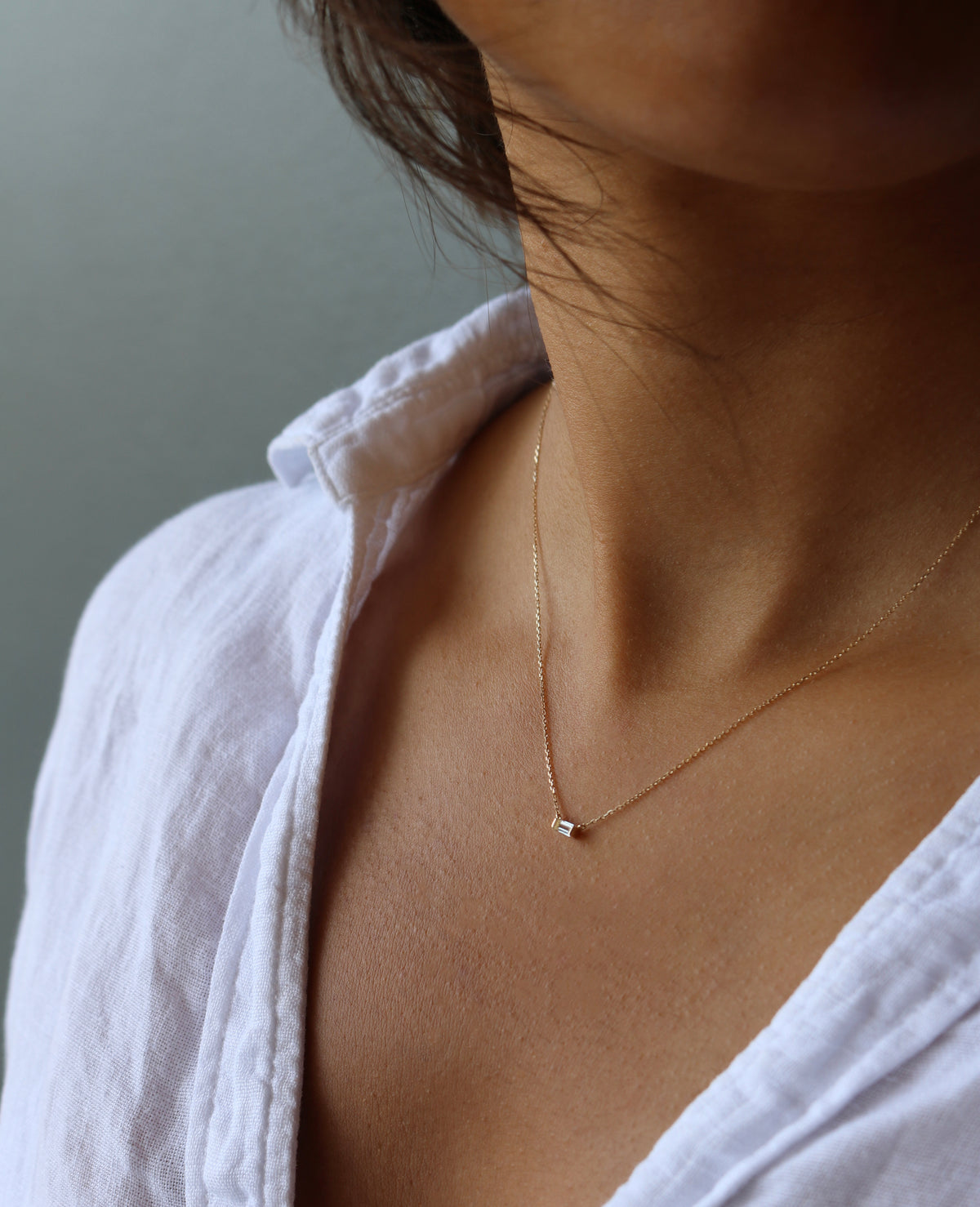
That delicate chain around your neck?
Gold's physical properties are part of what makes that kind of fine work possible.
|
|
03
BUT THERE'S A CATCH
Pure gold is
very soft.
Being easy to shape is useful when you're making jewelry.
It's less useful when you're trying to keep that jewelry from bending or scratching.
That's why the gold used in everyday jewelry is often alloyed with other metals.
|
|
REMEMBER LAST CLASS?
|
14K
14 parts gold
10 parts other metals
|
18K
18 parts gold
6 parts other metals
|
|

|
|
04
ALLOYS DO SOMETHING ELSE TOO
They can change
the color.
Gold doesn't have to look exactly the same.
The metals mixed with it affect its appearance.
The Met even documents ancient Egyptian gold ranging from bright yellow to paler yellow depending on how much silver was naturally present.
And one ancient Egyptian ring used added copper to create a noticeably redder hue.
|
|
SO YES
There's actual chemistry
behind the color of your jewelry.
|

|
|
PUTTING IT INTO PRACTICE
Meet Chelsea.
Chelsea Emerald Hoops / $350
VASI's Chelsea Hoops are made from solid 14K gold with emerald drops.
The hoops measure just 10mm across the outside, with 1.8mm emeralds — a very small-scale example of why gold's workability is so useful for jewelry.
|
|
THE 30-SECOND RECAP
Why gold works
so well for jewelry:
| 01 |
Highly resistant to corrosion |
| 02 |
Extremely malleable and workable |
| 03 |
Can be alloyed for greater hardness |
| 04 |
Alloy composition can change its color |
|
|
|
|
JEWELRY SCHOOL / LESSON 02
Turns out there are
a few good reasons
we're still obsessed.
Thousands of years later, gold is still doing the job.
|
|
SOURCES / READ MORE
Gemological Institute of America - Gold Content of Jewelry Metals
The Metropolitan Museum of Art - Gold in Ancient Egypt
|
|
VASI
MEANT TO BE SEEN, WORN + LOVED.
© {{ 'now' | date: '%Y' }} {{ shop.name }}
{{ unsubscribe_link }}
{{ open_tracking_block }}
|

